
Who Is Liable When a Neighbor’s Hillside Collapses Onto Your Property in Los Angeles?
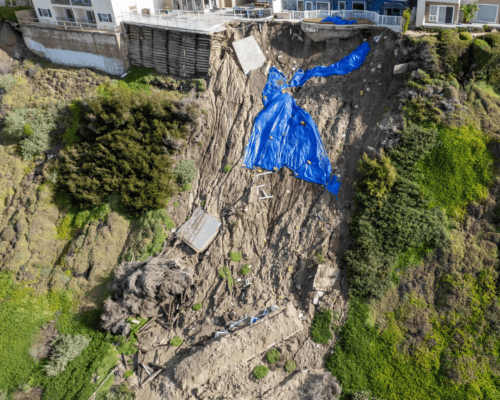
Throughout Los Angeles, where residential neighborhoods and commercial developments often occupy steep terrain, determining responsibility for a hillside collapse can lead to complex legal disputes. Property owners may find themselves questioning whether a neighbor, contractor, developer, or another party should be held accountable for their losses.
Liability may depend on what caused the hillside to fail. California law recognizes important distinctions between naturally occurring soil movement and instability caused or aggravated by human activity.
John S. Peterson is a Los Angeles landslide and subsidence attorney who represents property owners throughout Southern California. Peterson Law Group PC can investigate the circumstances surrounding a collapse, identify potentially responsible parties, and pursue compensation for the damage to our clients’ properties.
Can Your Neighbor Be Liable When Their Hillside Collapses?
Your neighbor may be held liable for a hillside collapse if their actions contributed to the slope’s failure and caused damage to your property. But liability depends on whether the collapse resulted from natural conditions, human activity, or a combination of factors.
Hillsides can collapse naturally due to erosion, unstable soil, groundwater conditions, or severe weather. When a landslide occurs without human interference, establishing a neighboring property owner’s liability may be more difficult.
However, if your neighbor made changes to their property that contributed to the hillside’s instability, they may be legally responsible for the resulting damage.
Examples of negligent actions may include:
- Excavating soil that previously supported an adjoining hillside.
- Building a retaining wall without proper engineering or structural support.
- Grading land in a way that alters natural drainage patterns.
- Installing irrigation systems that oversaturate the soil.
- Redirecting stormwater toward an unstable hillside.
- Performing construction that places excessive pressure on an existing retaining wall.
- Failing to address known drainage problems or visible signs of slope instability.
Understanding Lateral Support Under California Law
California law recognizes a property owner’s right to receive support from neighboring land. This protection, known as lateral support law, helps prevent excavation or construction on one property from destabilizing adjacent land. But the legal rules may differ depending on whether the damage affects land in its natural state or structures and improvements built on it.
Under California Civil Code § 832, adjoining property owners have certain rights to lateral and subjacent support. While property owners generally have the right to excavate or improve their land, they must follow specific requirements to reduce the risk of damage to neighboring properties.
Depending on the circumstances, these responsibilities may include:
- Providing reasonable notice to neighboring property owners before beginning certain excavation projects.
- Exercising ordinary care and skill when performing excavation work.
- Taking reasonable precautions to maintain the stability of adjoining land.
- Allowing neighboring owners an opportunity to protect buildings and other structures that may be affected by qualifying excavation work.
- Following additional requirements for deeper excavations that could increase the risk of damage to adjacent properties.
These protections are particularly important when excavation removes soil that helps support neighboring land. If construction activity causes the ground to shift, settle, or collapse, California’s lateral support laws may help determine who is responsible for the resulting damage.
How Can Human-Made Alterations Cause a Hillside Collapse?
Many Los Angeles hillsides have been altered repeatedly through development. A slope that appears natural today may contain compacted fill, buried drainage systems, old retaining walls, or grading performed decades earlier. These modifications can materially affect landslide liability.
Grading and Excavation
Removing soil from the bottom of a slope can weaken its support. Improper grading may also change the distribution of soil loads or expose unstable geological materials. If these changes contribute to a collapse, the property owner, developer, contractor, or another responsible party may face legal claims.
Retaining Wall Construction and Failure
Retaining walls are designed to resist soil pressure and help stabilize slopes. But inadequate drainage, defective construction, improper engineering, or deterioration can contribute to failure. A collapsing wall can release substantial soil onto adjoining property.
Determining liability may require reviewing construction plans, engineering calculations, permits, and maintenance history.
Irrigation and Landscaping
Landscaping can affect hillside stability, particularly when irrigation introduces excessive water into vulnerable soils. Leaking irrigation lines, improperly installed sprinklers, or sustained overwatering may contribute to soil saturation and movement.
Changes to Drainage and Water Runoff
Drainage systems can redirect water toward neighboring properties or concentrate runoff in locations that were not previously exposed to significant flows. When these changes contribute to erosion or slope instability, they can become central to a claim involving drainage damage from neighboring property.
How Do You Prove What Caused a Hillside Collapse?
Determining responsibility often requires extensive technical investigation. A geotechnical engineer may examine soil composition, groundwater conditions, slope geometry, retaining wall construction, and evidence of earlier earth movement.
This evidence can help identify whether the collapse resulted from natural geological conditions, human modifications, or a combination of factors.
Other important evidence may include:
- Historic grading plans
- Building permits
- Topographic surveys
- Engineering reports
- Drainage records
- Photographs and aerial imagery
- Maintenance and repair records
Speak With a Landslide and Substance Lawyer in Los Angeles
At Peterson Law Group PC, we represent California property owners in complex property disputes involving landslides, subsidence, land-use litigation, and property damage.
Founded in 2001, our firm brings decades of legal experience to disputes affecting valuable California real estate. Attorney John S. Peterson has earned an AV Rating from Martindale-Hubbell®, which is their highest distinction for ethics and legal ability. He also belongs to the exclusive Multi-Million Dollar Advocates Forum.
Call (213) 236-9720 to schedule a free consultation with John.
Frequently Asked Questions About Hillside Collapse Liability in Los Angeles
Who is responsible if my neighbor’s hillside collapses onto my property?
Responsibility depends on what caused the hillside to fail. If the collapse resulted from natural geological conditions, your neighbor may not necessarily be liable. However, if improper grading, excavation, drainage modifications, negligent construction, or other actionable conduct contributed to the failure, one or more parties may be responsible for the resulting damage.
Can I sue my neighbor for landslide damage after heavy rain?
Potentially. Heavy rainfall does not automatically eliminate responsibility for hillside damage. If a neighbor’s excavation, defective retaining wall, irrigation system, or unreasonable drainage modifications contributed to the collapse, there may be grounds for a legal claim. Geotechnical evidence is often necessary to distinguish storm-related natural movement from instability caused or worsened by human activity.
Is my neighbor responsible for an old retaining wall that collapsed?
Possibly. Even if a previous owner constructed the wall, the current property owner’s knowledge, conduct, maintenance responsibilities, and ability to address dangerous conditions may be relevant. Prior owners, developers, engineers, or contractors might also bear responsibility, depending on the evidence and applicable legal limitations.
Call To Reach Us For A Prompt Response
Los Angeles Office: (213) 236-9720
Irvine Office: (949) 955-0127