
What Is My Church Property Worth in an Eminent Domain Case?
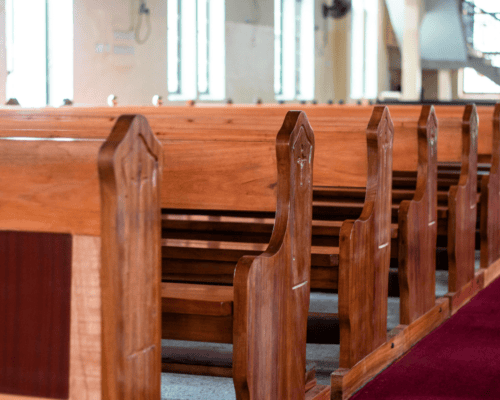
When a government agency seeks to acquire church property through eminent domain, pastors, elders, and church leaders are often faced with a difficult reality: they may be forced to relocate or close a ministry location they have spent decades building.
In these situations, compensation matters; not because money can replace a congregation’s history or mission, but because fair compensation is often the only way a church can continue serving its community elsewhere.
Churches face unique challenges in condemnation cases, and those challenges require legal representation that understands both valuation principles and the practical realities facing religious organizations.
John Peterson is an eminent domain attorney in Los Angeles with decades of experience representing property owners in California. If your church property has been targeted for eminent domain, Peterson Law Group PC can explain your legal options and provide an accurate assessment of your property’s value.
Why Church Properties Are Different
Churches are considered special-purpose property, which means they do not fit neatly into traditional real estate valuation models. Unlike office buildings, apartment complexes, or retail centers, churches are rarely bought and sold on the open market. As a result, determining fair compensation requires a careful analysis that goes beyond standard appraisal methods.
Government agencies frequently rely on conventional valuation techniques that may fail to account for the unique characteristics of a religious property. Church leaders should understand that a low appraisal does not necessarily reflect the property’s true value.
An experienced eminent domain attorney can work with qualified appraisers and valuation experts to ensure all relevant factors are considered.
Community Value Matters
A church often serves purposes that extend far beyond Sunday services.
Many congregations provide:
- Food distribution programs
- Youth ministries
- Counseling services
- Community meeting space
- Educational programs
- Homeless outreach
- Disaster relief efforts
These functions create substantial value for the surrounding community. While California eminent domain law generally focuses on compensable property interests rather than sentimental value, understanding a church’s role in the community can be critical when evaluating the practical impact of a taking.
For church leaders, the loss is not simply about relocating a building. It may involve rebuilding relationships, reestablishing community programs, and finding a suitable replacement property that can support the ministry’s mission.
A comprehensive eminent domain strategy recognizes these realities and seeks compensation that allows the church to move forward effectively.
The Challenge of Limited Income Metrics
Commercial properties are often valued using income-based approaches. Appraisers may examine rental income, operating expenses, and investment returns to determine value. Churches rarely fit this model.
Most congregations do not operate as income-producing real estate investments. Their facilities may be owned outright and used exclusively for ministry purposes. Because there is little or no rental income to analyze, traditional income approaches often provide limited guidance. This creates challenges for government appraisers and can result in valuations that fail to reflect the property’s true market position.
Church properties often feature specialized facilities and design elements that set them apart from other commercial buildings, including sanctuaries, fellowship halls, educational buildings, daycare centers, and religious schools. They may also include large parking areas and custom architectural features that require careful consideration when evaluating insurance coverage and property risks.
These features may have significant value even though they do not generate conventional income. When income metrics are lacking, other valuation methods become increasingly important.
The Importance of Replacement Cost
One of the most significant considerations in church property valuation is replacement cost. Replacement cost analysis examines what it would take to acquire land and construct a comparable facility in today’s market.
This can be particularly important because many churches were built years ago, when land and construction costs were substantially lower. A congregation that receives compensation based solely on a narrow market analysis may discover that it cannot purchase a comparable property in the same community.
Issues that should be considered include:
- How much would it cost to acquire replacement land?
- What are current construction costs?
- How much would specialized religious facilities cost to rebuild?
- What would it take to recreate classrooms, meeting areas, and ministry spaces?
- Are zoning restrictions making replacement properties difficult to find?
These issues can significantly affect the amount of compensation that should be pursued.
What Is Your Property Worth?
Several factors commonly influence value in an eminent domain case. A thorough valuation should not simply rely on the government’s initial appraisal.
Location
Properties in highly developed areas of Los Angeles and Southern California often command substantial value due to limited land availability and strong demand.
Land Size
Large church campuses may include excess land, parking facilities, recreational areas, or future expansion opportunities that contribute to overall value.
Improvements
Sanctuaries, educational buildings, administrative offices, community centers, and specialized facilities all require careful evaluation.
Zoning and Permitted Uses
The property’s zoning classification can significantly impact value. In some situations, the highest and best use may differ from the property’s current use.
Replacement Potential
The cost and feasibility of obtaining a comparable replacement property may be highly relevant to negotiations and your litigation strategy.
Impact of the Taking
Partial acquisitions can be particularly complex. Even if the government does not take the entire property, the loss of parking, access, or usable land may substantially impair church operations.
Building an Effective Eminent Domain Case Strategy
Church leaders should never assume the government’s initial offer represents fair compensation. Developing an effective case strategy often includes:
- Independent Appraisals. An independent valuation can identify issues that government appraisers may have overlooked.
- Replacement Property Analysis. Understanding replacement costs is often essential when evaluating whether compensation is sufficient.
- Engineering and Land Use Review. Experts may help assess how the taking affects the property’s remaining functionality.
- Damages Analysis. Partial takings can create significant losses that are not immediately obvious.
- Early Legal Evaluation. The earlier a church consults experienced eminent domain counsel, the more opportunities there may be to protect its interests.
Speak With an Experienced Eminent Domain Attorney in Los Angeles
If your church has received notice of a proposed taking, you do not have to accept the government’s valuation at face value. The compensation offered should reflect the true value of your property, the impact on your ministry, and the costs associated with continuing your mission elsewhere.
John Peterson has spent decades representing California property owners in eminent domain cases, and he has been recognized by Best Lawyers and Super Lawyers based on peer reviews and independent research.
At Peterson Law Group PC, we understand that churches are more than buildings; they are community institutions that deserve vigorous protection when government projects threaten their future.
Call (213) 236-9720 to learn more today.
Eminent Domain Valuation and Church Property FAQs
How is a church property valued in an eminent domain case?
Church property is often considered a special-purpose property, which means traditional valuation methods may not fully reflect its value. Appraisers may consider factors such as the property’s location, land value, building improvements, replacement cost, zoning, and the availability of comparable church properties. Because churches rarely generate income like commercial properties, valuation often requires a more specialized analysis.
Can a church recover compensation for more than just the land and building?
While eminent domain compensation is generally based on the property’s fair market value, churches may also be entitled to compensation for damages resulting from a partial taking, loss of parking, reduced access, or other impacts that affect the property’s usability. Every case should be evaluated individually to determine the full extent of compensable losses.
What if the government’s appraisal seems too low?
You are not required to accept the government’s valuation. Government appraisals can overlook important factors, including replacement costs, specialized improvements, and the unique nature of church properties. An experienced eminent domain attorney can work with independent appraisers and experts to determine whether the initial offer accurately reflects the property’s true value.
Does the church’s role in the community affect its value?
Although sentimental value and community impact are not typically directly compensated, the church’s use and functionality can influence valuation. A church that serves as a community center, school, food distribution site, or outreach hub may have unique features and improvements that must be properly considered when determining fair compensation.
What happens if only part of the church property is taken?
A partial taking can still have a significant impact on church operations. Losing parking areas, access points, classrooms, or open space may reduce the property’s functionality and value. In many cases, churches may seek compensation not only for the property acquired but also for damages to the remaining property.
When should a church contact an eminent domain attorney?
Church leaders should consult an eminent domain attorney as soon as they receive notice of a proposed acquisition or public project affecting their property. Early legal involvement can help protect the church’s rights, identify valuation issues, challenge inadequate appraisals, and develop a strategy to secure the compensation needed to continue the ministry’s mission.
Call To Reach Us For A Prompt Response
Los Angeles Office: (213) 236-9720
Irvine Office: (949) 955-0127